

Configuration Management
Automation and Control for Oracle Fusion Cloud and E-Business Suite
Powered by ConfigSnapshot, Flexagon provides end-to-end control of functional configuration across the application lifecycle. Automation driven by DevOps principles reduces risk, errors, and manual effort while ensuring every change is governed, auditable, and compliant.
Get PricingRequest a Demo
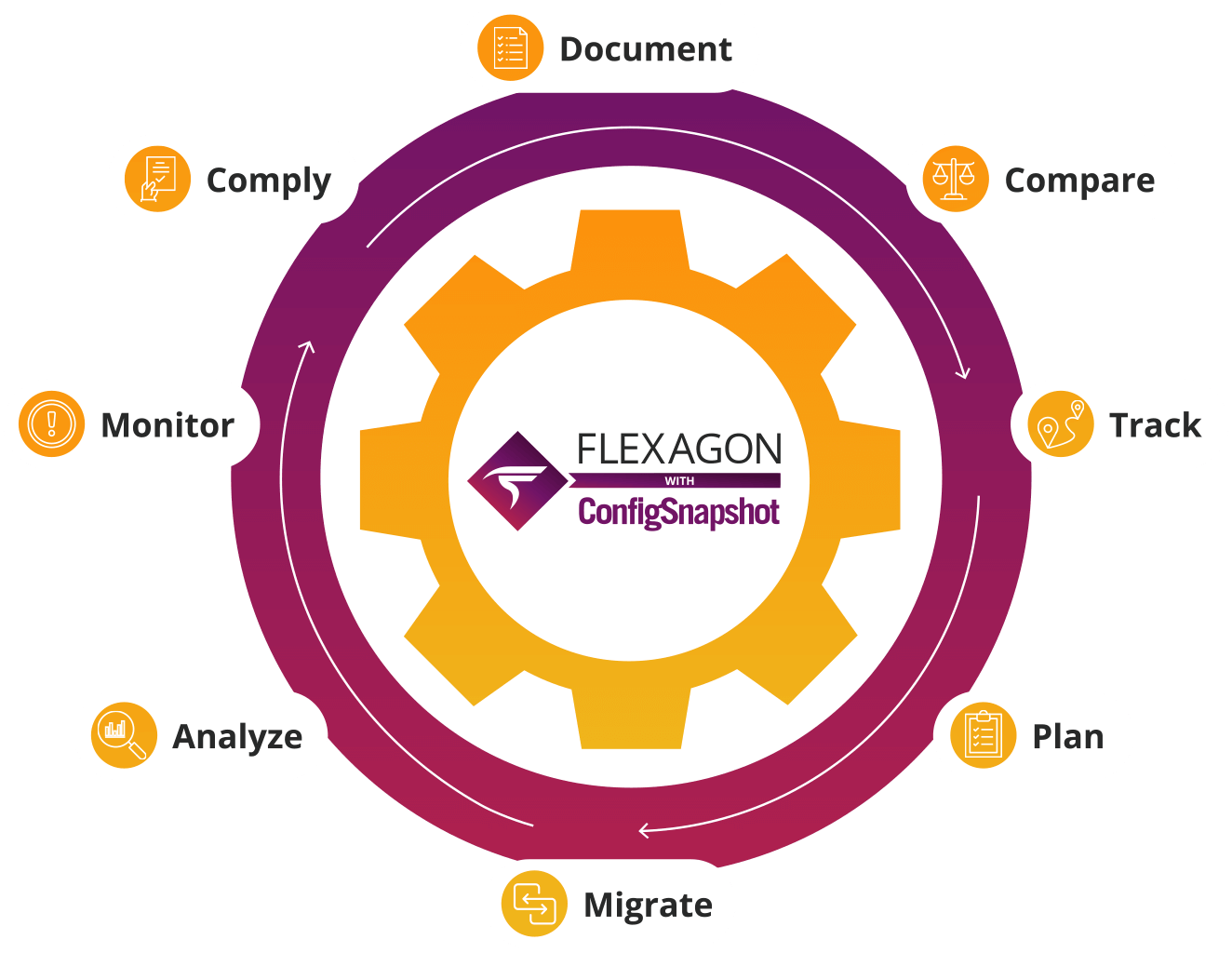
A DevOps-driven Configuration Lifecycle
Flexagon manages functional configuration as a continuous, DevOps-driven lifecycle rather than a set of isolated tasks. Each capability builds on the last, starting with accurate documentation and comparison, progressing through tracking, planning, migration, and analysis, culminating in ongoing monitoring and compliance. Together, they provide a structured, auditable approach to understanding, changing, and governing configurations across and within environments and over time.
Document
Accurate, automated documentation with flexible, audit-ready output
Compare
Environments, entities, versions and planned vs actual
Track
Identify change over time - point-to-point or full audit trail
Plan
Prepare configurations by extracting or transforming existing data, or by creating new configurations
Migrate
Deploy planned configuration to any environment through DevOps pipelines with approval gates and full control
Analyze
Transform configuration data into actional insight
Monitor
Define and monitor configuration views aligned to business and audit requirements
Comply
Automate compliance checks and segregation of duties analysis
Application Lifecycle Benefits
Implement
Document, plan, track, and migrate configuration - reducing risk and delivering consistent implementation outcomes
Enhance
Safely introduce and govern configuration changes to support evolving business requirements
Rollout
Replicate and adapt configuration across new business units, regions, or entities
Upgrade
Understand, manage, and validate the impact of functional changes introduced by application upgrade
Support
Maintain visibility and control of configuration during day-to-day operational support activities
Patching
Assess and manage the configuration impact of EBS patches before and after they are applied
Audit
Provide clear, auditable evidence of configuration state, change history, and governance controls
Segregation-of-Duties
Identify and manage risks across users, roles, and configurations including what-if analysis
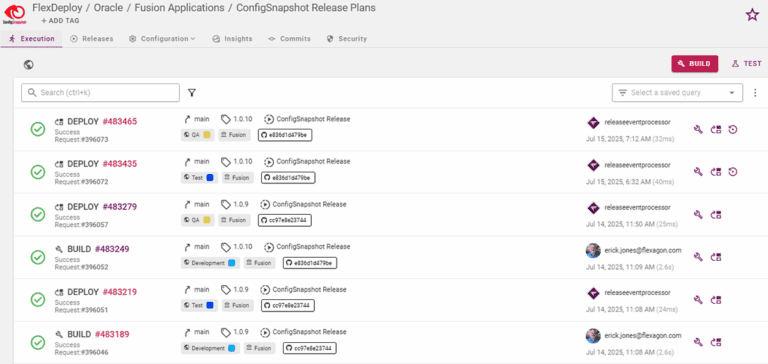
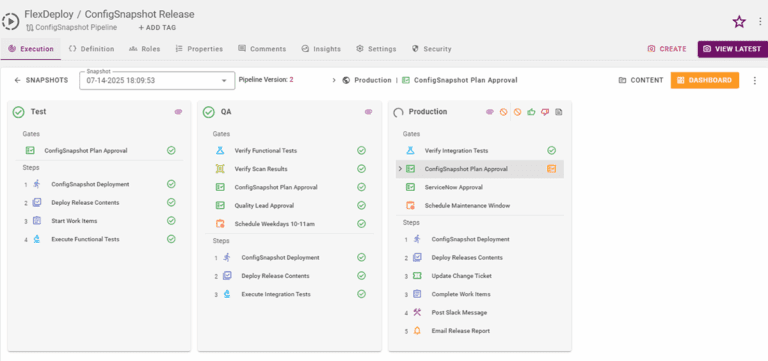
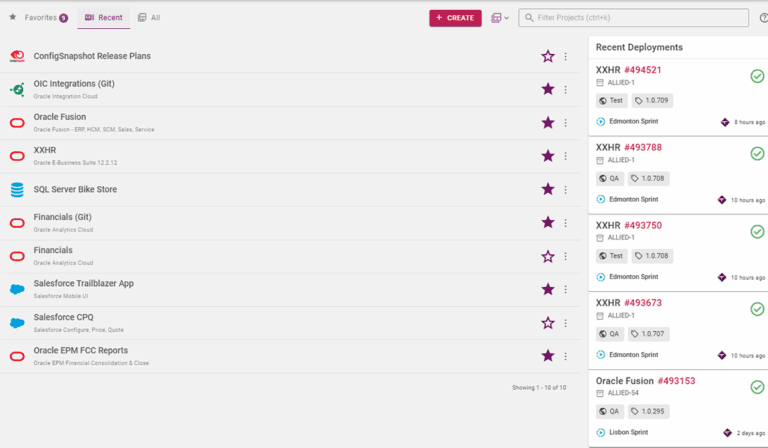
Modernized User Experience for Functional Teams
Saves time and Cost
Automate repetitive tasks and focus on strategic initiatives.
- Reduce manual effort spent documenting, reworking, and reconciling configuration
- Shorten implementation, rollout, and upgrade cycles without cutting corners
- Lower the cost of rework and retesting through earlier visbility
- Accelerate enviornment promotion and testing cycles
- Minimize delays caused by late discovery of configuration issues
- Free up functional experts to focus on design and decision-making
Reduces errors
Ensure accuracy with automated processes and detailed insights.
- Identify unexpected or unauthorized configuration changes early
- Ensure planned configuration matches what is deployed in each environment
- Prevent configuration drift between environments
- Reduce reliance on manual, error-prone processes
- Catch issues before they impact users or business processes
Enhances compliance
Maintain control with robust tracking and reporting tools.
- Maintain clear, auditable records of configuration change and change history
- Enforce governed, approval-based deployment of configuration
- Enable segregation of duties analysis and reporting
- Provide clear evidence for internal and external audits
- Ensure configuration aligns with security and regulatory requirements
Boosts efficiency
Streamline configuration management for faster deployments.
- Give teams a single, trusted source of configuration truth
- Enable functional and IT teams to work from the same data and plans
- Repeatable, automated processes speed up delivery
- Focus effort on analysis and decision-making, not data gathering
- Improve collaboration across project and operational teams
- Reduce overhead in day-to-day support and governance activities
Configuration Management Resources
Articles
The Business Case for DevOps Automation and Configuration Management
Enterprises rely on complex applications for core business functions like finance, HR, and supply chain management. While these systems are ...
Articles
Streamline DevOps with FlexDeploy and ConfigSnapshot
Managing software delivery pipelines can be daunting, with complex workflows, multiple tools, and operational risks. One major challenge is configuration drift, ...
Articles
Revolutionizing Oracle DevOps: FlexDeploy Meets ConfigSnapshot
In the ever-evolving world of Oracle applications, managing cross-module impacts, governance, and change management is no small feat. As organizations ...
White Papers
Effective Configuration Management White Paper
Unlock the Full Potential of Configuration Management Discover how to manage, control, and track changes with precision throughout your system’s ...
Manage the entire application lifecycle from a single platform
Flexagon enables organizations to manage both functional and technical application assets from one unified platform. Built on DevOps principles, it brings together configuration management, build and deployment automation, release orchestration, and risk management - providing end-to-end control across the full enterprise application lifecycle